Over the past years, our platform has grown into one of the largest living archives of artworks worldwide. With that growth, one challenge keeps coming back: how do we fairly compare art of very different scales and techniques
Right now, “big” and “small” are subjective. A 20 m² wall in one city might feel huge, while a 1,500 m² silo in another city is just “normal.” To make our ecosystem more transparent, comparable, and culturally grounded, I’d like to propose a new size‑based classification system rooted in both credibility and street culture.
**
Why a classfication system?
**
Size is not just a physical measurement; it’s a proxy for deeper cultural and urban dynamics. And we’ve heard on some conferences, academics are actually looking for something like this. It gives them some extra inights in:
Production complexity: Larger works require lifts, budgets, permits, teams, and institutional support.
Spatial politics: Big walls often signal municipal approval; small ones may reflect grassroots autonomy.
Visibility and impact: Scale affects how murals shape public space, memory, and collective identity.
Cultural lineage: Graffiti and muralism both use size as a marker of ambition, skill, and risk.
A classification system captures these dynamics in a way that can be studied systematically.
A shared system would help us:
Improve search, filters, and analytics on the platform
Give artists and festivals clearer recognition for the scale of their work
Strengthen our storytelling with consistent, culturally rooted language
Build a foundation for future metrics (impact, visibility, difficulty, etc.)
This isn’t about ranking murals by size, it’s about giving each work the context it deserves.
Proposal for categories.
Here’s my idea for this classification and I thought of some cool names for it.
Stickers: small adhesive artworks used for rapid visibility and identity-building in public space.
Paste ups: Paste‑ups are paper artworks or printed media adhered to walls using wheatpaste or other glues. They range from A4 sheets to multi‑meter murals.
stencils: one layered or multi layered stencil no bigger than ca 1m² (big stencil works like the ones SNIK produce, should be included in the mural classes below.
street furniture: all sorts of items like electricity cabins, benches,bus shelters, lamp posts, etc.
XS MURAL (0–10 m²): THROWUP
Small interventions, doors, boxes, intimate street moments.
S MURAL (10–30 m²): BURNER
A crafted artwork with intention, still human‑scale.
M MURAL (10–30 m²): BLOCKBUSTER
The classic full wall that anchors a street or corner.
L MURAL (100–300 m²): LANDMARK
Large, bold, multi‑story works with strong visual impact.
XL MURAL (300–1,000 m²): MONUMENT
Façades that define a neighborhood; major production effort.
I do like this idea. Can Paste Ups be expanded to include printed media, or maybe have a category for that?
An example: New Urban Era in Tamworth have for the last few years been getting artists to decorate their bus shelters. Sometimes the artists have painted the bus shelters directly. Others have had specially cut boards painted at art festival events, and the boards were later mounted to a bus shelter.
However, one of the bus shelters (this one) was decorated with artwork painted by patients at a mental health centre. The artwork was printed onto panels, and it was those that were added to the shelter.
I made the decision to include that artwork as it was part of the series, and these pieces were not mass-produced. I did make it clear in the description how the art was presented (ie printed panels) so not to disappoint the unwary SAC visitor.
I do think that it would be important for a classification type field to restrict it to a set of discrete, system-defined values (such as those you’ve outlined), as a classification system can quickly become garbage if you just let people “free-for-enter” text. Obviously, system admins could add new definitions over time, but users should be limited to choosing from a defined list I think.
Do we also need a value for Stencils and also Installations (eg three-dimensional pieces) with maybe some different sizes as for the mural class?
Also, do you include graffiti in “murals” or does that need a separate value too?
“Street Furniture” would probably cover most things (bench seats, bus shelters, bollards, lamp posts, etc). Technically, junction boxes wouldn’t be covered by it, but technically, SAC probably doesn’t need to be worried by official dictionary definitions
I love this idea too. It would add bit of order in the app. It would also help hunters and visitors decide if they want to travel to see certain pieces since often a close up shot of the piece doesn’t allow to see what size or type it is, leading, sometimes, to disappointment!
Overall a great idea!
I like it! I’d maybe use a new marker tag for it, just so that we can limit it only to those options (you can create it in the admin dashboard if you want to, or I can do it).
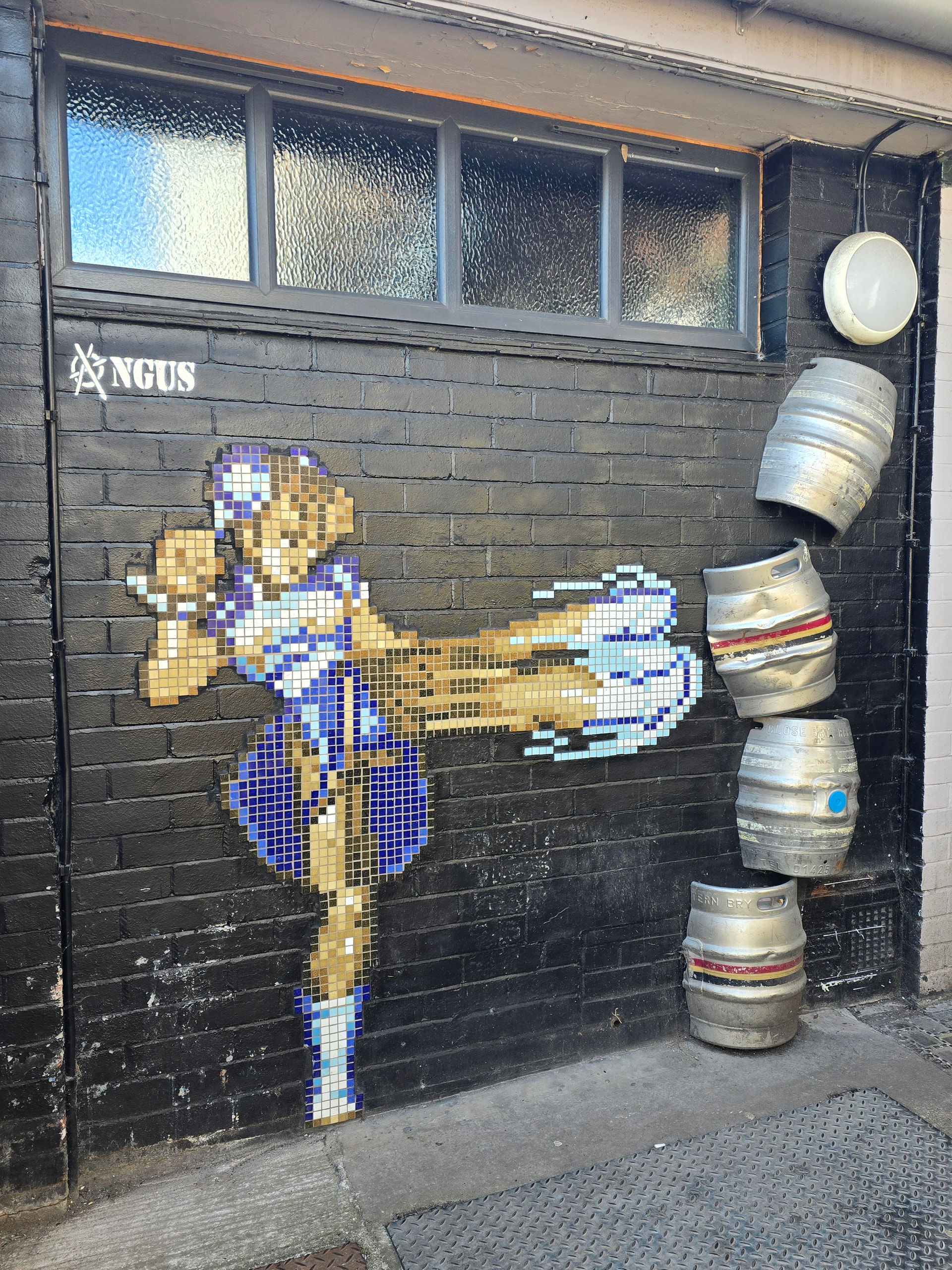
I think street art will always be hard to classify as type of artwork, as street artists find new and wonderful ways of making us ask, “does this class as a mosaic, or an installation?”
in my opninion Mosaic should get their own qualification!
Something like: Mosaic: all ‘invader like’ interventions smaller than 1m², bigger ones should be counted as murals.